
Sunscreen Ingredient Fears vs. Real Risk: What to Actually Do About It in Los Cabos
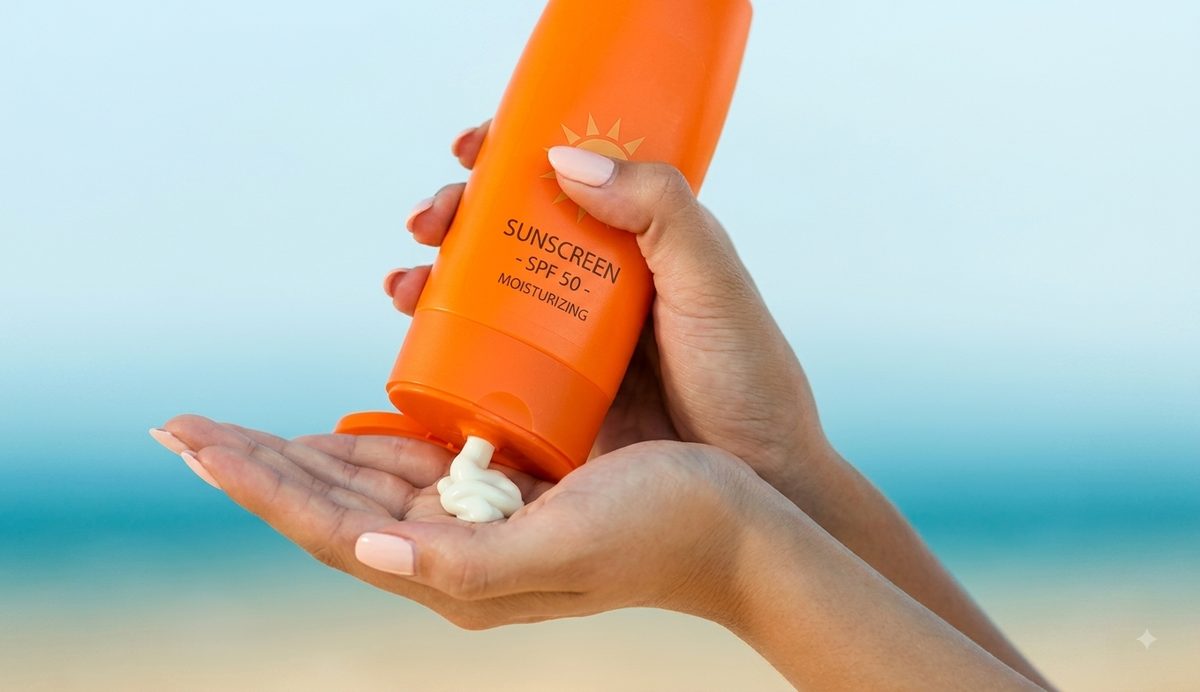
If you’ve searched “is my sunscreen safe” recently, you’ve probably landed on an Environmental Working Group (EWG) score — a red-yellow-green rating that flags common chemical filters like oxybenzone and avobenzone as concerning. In their 2025 guide, EWG found that only about a quarter of the 2,200+ sunscreens they reviewed met their bar for both adequate protection and “no worrisome ingredients.”
That number gets shared a lot. What gets shared less is what it actually means for you, standing in a pharmacy in Cabo San Lucas trying to decide which bottle to buy.
What’s actually true
A few things are well established:
- Chemical filters are absorbed into the bloodstream. FDA studies confirmed this years ago, and it’s not disputed. Oxybenzone shows the highest absorption of the approved filters.
- Only two active ingredients have full FDA safety approval (GRASE status): zinc oxide and titanium dioxide — the two mineral filters. The other twelve, including oxybenzone, octinoxate, avobenzone, and octocrylene, are still classified as “needs more data,” not “unsafe.”
- Absorption is not the same as harm. As the American Academy of Dermatology puts it, an ingredient showing up in blood tests doesn’t mean it’s causing damage — it means we don’t yet have enough long-term data to rule effects in or out either way.
- No sunscreen ingredient sold in the U.S. has been shown to cause cancer or measurable hormone disruption in humans at real-world exposure levels. A 2025 review specifically looking at six common chemical UV filters found no cancer link. The JAMA studies EWG often cites detected filters in blood — they didn’t find health effects.
There’s a real, separate concern with oxybenzone and octinoxate: reef and coral impact, serious enough that Hawaii and Palau have banned them outright. That’s a legitimate reason to prefer mineral sunscreen if you’re swimming here in Los Cabos — it’s an environmental argument, though, not a personal-health one.
The risk that’s actually large
Skin cancer affects roughly 1 in 5 Americans by age 70, and cumulative UV exposure — not sunscreen chemistry — is the driver. Los Cabos sits at a latitude and altitude combination that pushes UV index into the “extreme” range most of the year. That’s the risk that shows up in a clinic, not a theoretical hormone effect from a filter with incomplete paperwork.
Dermatologists surveyed at the AAD’s 2026 meeting split their own preferences — 66% chose mineral sunscreen, 20% chemical, 14% either — which tells you this isn’t a settled “chemical bad, mineral good” story so much as a preference among options that are all, per current evidence, reasonably safe.
What we actually tell patients
- Use SPF 30+, broad-spectrum, water-resistant sunscreen — any FDA-compliant one — every day you’re outside. The sunscreen you’ll actually reapply beats the theoretically purer one sitting unused in a bag.
- If you want to minimize both absorption and reef impact, choose a mineral sunscreen (zinc oxide or titanium dioxide, often labeled “mineral” or “physical”). It’s a reasonable preference, not a medical necessity.
- Reapply every two hours outdoors, and after swimming — this matters more than which active ingredient is on the label.
- Don’t let an EWG score talk you out of using sunscreen at all. Going bare in Los Cabos sun is the one option that’s clearly, measurably worse than any product on the shelf.
If you’re unsure what’s right for your skin, or you’re noticing a new or changing spot, message us on WhatsApp — a doctor can take a look without you needing to sit in a waiting room.